Thousands of years of history
A journey through time across these islands full of mystery and tradition
The origins
The name of the Cíes Islands comes from the Latin Insulae Deorum (Islands of the Gods), revealing the spiritual importance they held since Antiquity. The Romans knew them as the islands of the gods for their beauty and their strategic location at the entrance to the Ría de Vigo.
Remains of Celtic hillforts have been found on the island of San Martiño, proving that the archipelago was inhabited from at least the Iron Age. The Romans also left their mark, using the islands as a lookout point and exploiting their fishing resources.
The Roman geographer Pliny the Elder mentioned these islands in his writings from the 1st century, referring to them as an inhabited place known to sailors.
Monks and Vikings
During the Middle Ages, the islands were a refuge for monks and hermits seeking isolation for contemplative life. Several monasteries were established, including San Estevo on Monteagudo island and San Martiño on the southern island.
However, the monks' tranquillity was disrupted by Viking raids in the 9th and 10th centuries. The Norsemen plundered the monasteries on several occasions, forcing the monks to flee to the mainland.
Later, in the 16th century, the islands suffered an attack by the privateer Francis Drake, who used them as a base to launch raids against Vigo and other cities on the Galician coast.
Protecting paradise
Throughout the 18th and 19th centuries, the islands were used as a strategic military point and for coastal surveillance. Several defensive fortifications were built, the ruins of some of which can still be seen today.
In 1980, the Cíes Islands were declared a Natural Park, marking the beginning of their official protection. This was the first step to halt environmental degradation and regulate visits.
The most important moment came in 2002, when the islands became part of the Atlantic Islands of Galicia Maritime-Terrestrial National Park, together with the archipelagos of Ons, Sálvora and Cortegada. It is the only national park in Galicia.
An island icon
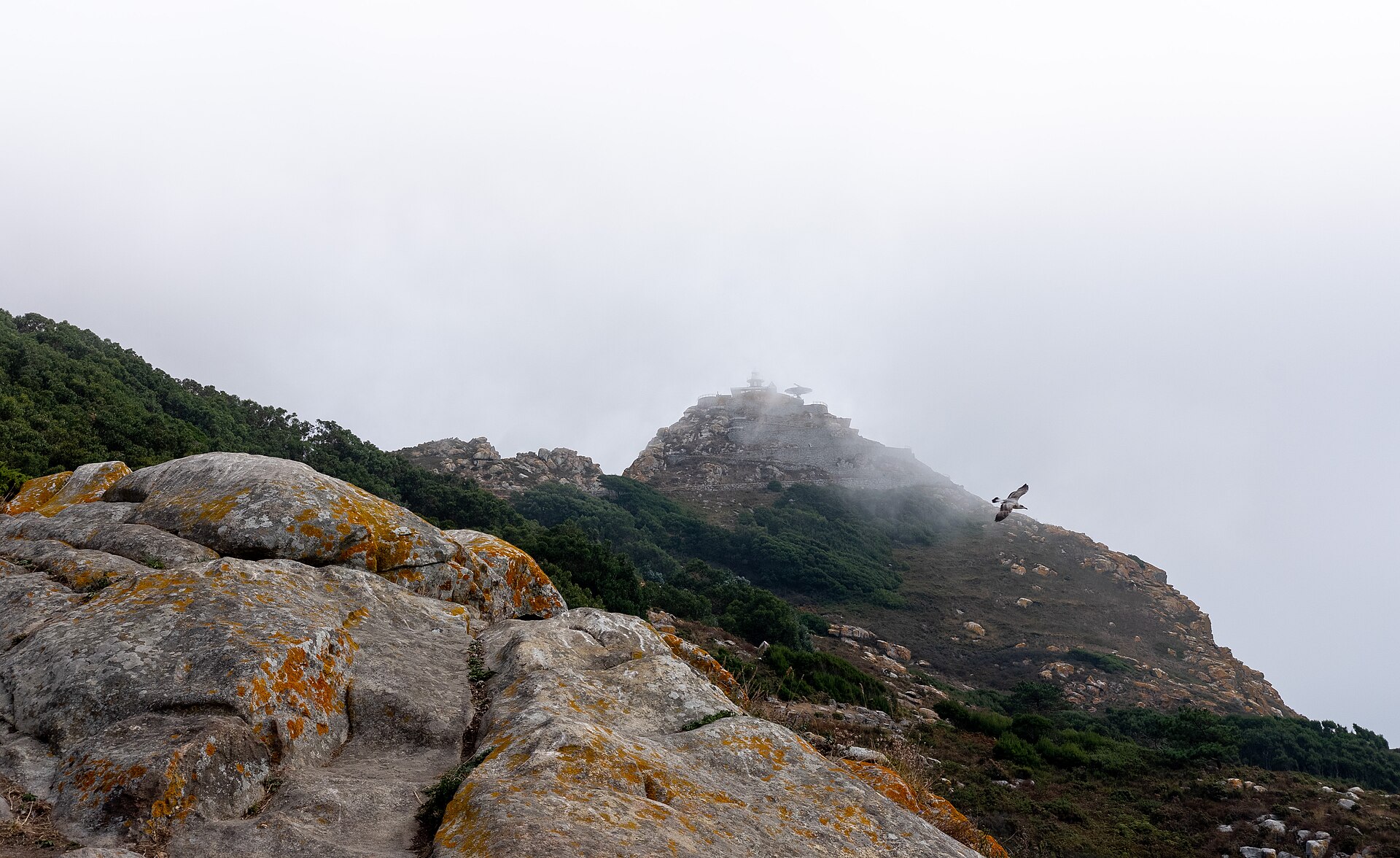
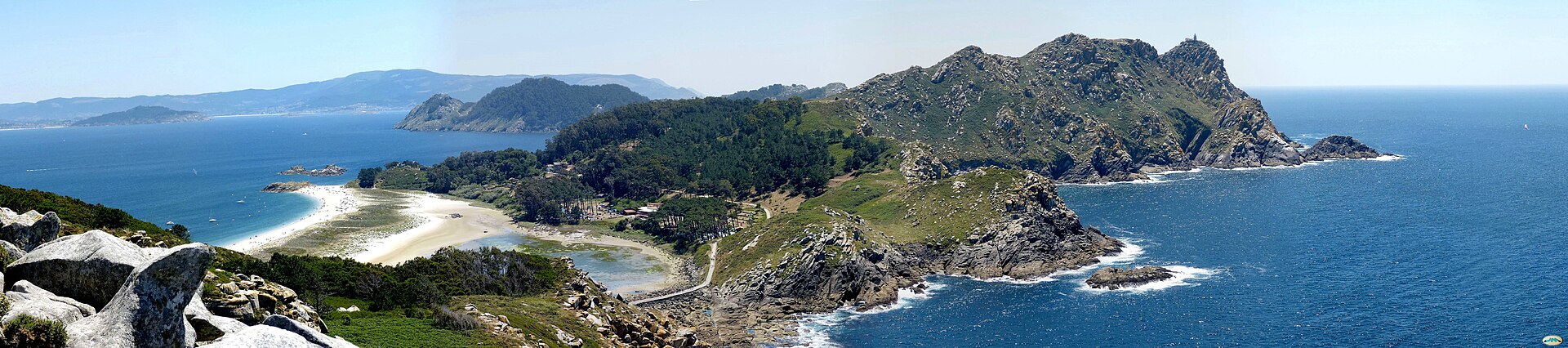
The Cíes Lighthouse, perched atop Do Faro island at 175 metres altitude, is one of the most recognisable symbols of the archipelago. Built in 1853, it was electrified in 1905 and automated in the following decades.
From its privileged location you can enjoy the best panoramic views of the entire archipelago and the Ría de Vigo. It is the endpoint of the most popular hiking trail on the islands.
Surprising facts
In 2007, the British newspaper The Guardian published an article declaring Rodas Beach the best beach in the world. This triggered a surge in international tourism to the islands.
The Cíes Islands are home to one of the largest yellow-legged gull (Larus michahellis) colonies in the world, with over 22,000 breeding pairs.
Only around 1,800 people can visit the islands per day. This restriction, imposed to protect the ecosystem, makes the Cíes one of the most exclusive destinations in Europe.
The islands hold UNESCO Starlight certification, recognising the exceptional quality of their night skies for astronomical observation.
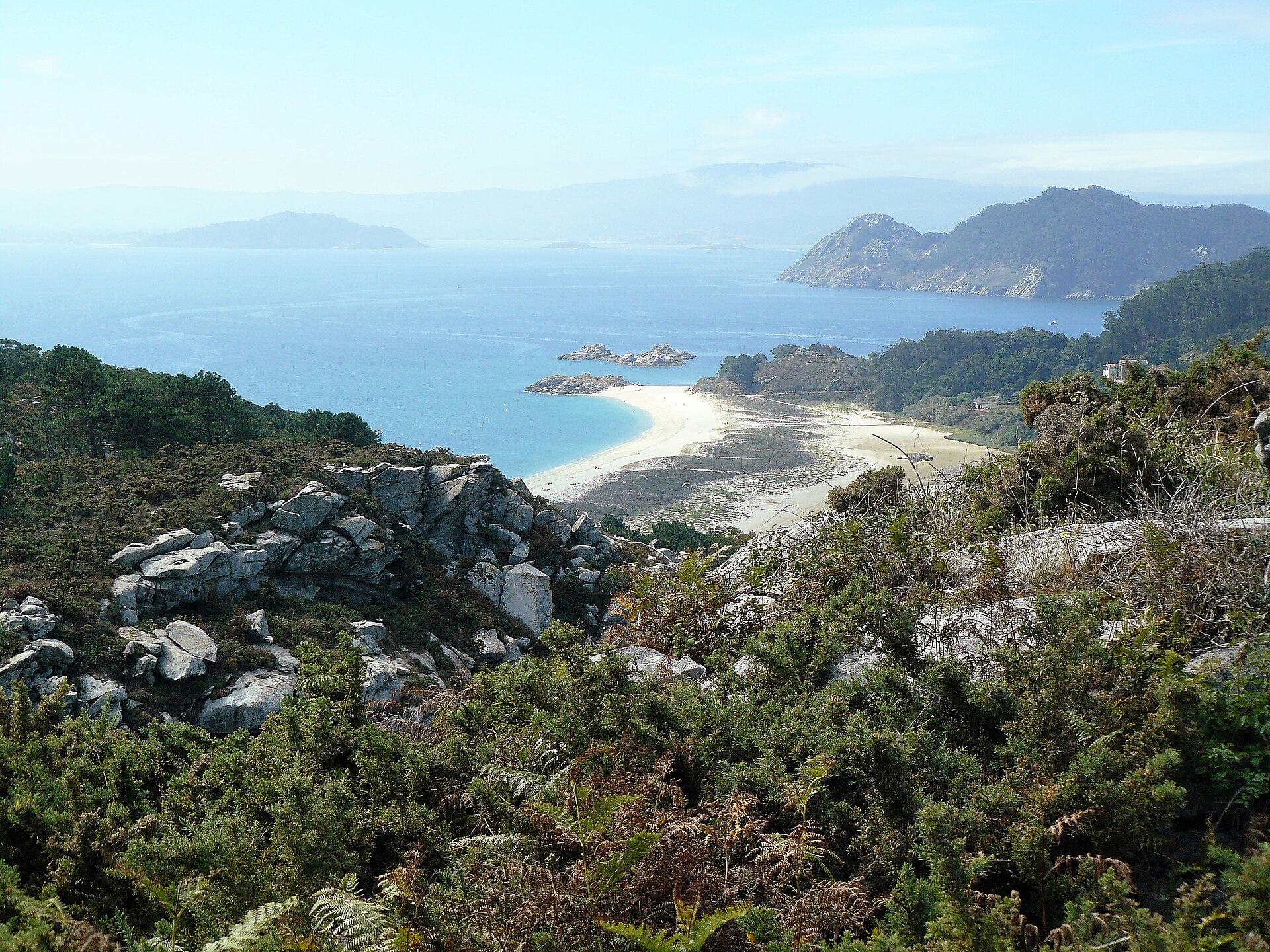
The lagoon connecting the islands of Monteagudo and Do Faro (behind Rodas Beach) is a unique saltwater lake, formed by the accumulation of sand that created a natural isthmus.
The islands are home to over 400 plant species, including camariñas, gorse and Atlantic heathers. Their seabed supports more than 200 species of algae and a rich underwater fauna.
Myths and traditions
Popular tradition tells that the Cíes were created by the gods as their earthly resting place. Galician fishermen used to say that on foggy nights, divine chants could be heard coming from the islands.
According to legend, the privateer Francis Drake hid part of his loot in a cave on the islands after one of his attacks on Vigo in 1585. Many have searched for it, but no one has found it.
On Monteagudo island there is a rock formation known as the Pedra da Campá (Bell Stone). It is said that when the wind blows strongly, the rock produces a sound similar to a bell, which ancient sailors interpreted as a warning.